
Nutrition · 5 min read
On a weight-loss medication? How to protect your muscle
The short answer: lift weights regularly and eat enough protein. GLP-1 medications can help you lose weight, but not all of that weight is fat. Some of it can be muscle, and muscle is the tissue you most want to keep as you get older. Strength training and protein are the two tools that help you hold on to it. Your doctor manages the medication. Your job, and ours, is the training.
Why muscle loss matters on these medications
When you lose weight by any method, you lose some lean mass along with fat. Lean mass means everything that isn't fat, and muscle is a big part of it. With GLP-1 medications the weight often comes off quickly, so the muscle you lose can add up. Mayo Clinic notes that research suggests about 25% to 40% of the weight lost during GLP-1 therapy may come from lean mass.
Researchers at the Harvard T.H. Chan School of Public Health make the same point: many patients lose muscle as well as fat, and diet and exercise still matter when you take these medications.
Why care? Muscle does a lot of quiet work. According to Mayo Clinic, it is a major contributor to the calories you burn at rest and a key place your body uses blood sugar. Losing it can raise the risk of falls, frailty and losing your independence.
Strength training: the signal to keep muscle
Muscle stays when you give it a reason to. Lifting weights is that reason. A joint advisory from four nutrition and obesity medicine groups, published in The American Journal of Clinical Nutrition, recommends regular strength training at least three times a week for people on GLP-1 therapy, plus at least 150 minutes of moderate aerobic exercise each week.
The CDC's guidelines for older adults set a minimum of two days a week of muscle-strengthening activity that works all the major muscle groups: legs, hips, back, abdomen, chest, shoulders and arms. They also recommend balance activities.
What that looks like in practice:
- Cover the big movements. Squat (or sit to stand from a chair), hinge, push, pull and carry.
- Make it challenging, not painful. Finish each set feeling you could do two or three more reps with good form.
- Add a little over time. A few more reps or a slightly heavier weight every week or two keeps the signal strong.
- Go easy on low-energy days. Eating less can leave you tired. Lighter weights still count. Skipping the week doesn't.
Protein: give your muscles something to work with
These medications often reduce appetite, and the joint advisory notes that eating too little protein because of a smaller appetite may add to muscle loss. The general recommendation for adults is 0.8 grams of protein per kilogram of body weight a day. During active weight loss, the advisory notes that higher targets of 1.2 to 1.6 grams per kilogram have been proposed, or an overall target of 80 to 120 grams a day.
For a 150-pound person (about 68 kilograms), 1.2 to 1.6 grams per kilogram works out to roughly 82 to 109 grams a day. A few habits make that easier when you're not very hungry:
- Eat your protein first at each meal.
- Spread it across the day rather than saving it for dinner, as Mayo Clinic suggests.
- Keep easy options on hand: eggs, Greek yogurt, cottage cheese, fish, chicken, beans or tofu.
- Drink enough fluids. Mayo Clinic lists staying well hydrated among its practical tips.
If you have kidney disease or your doctor has given you a protein limit, follow their advice instead.
How we handle this at our Woodinville studio
If you're on a weight-loss medication, our approach starts the same way as for everyone else. Your first visit is a free Starting Point Session with Maddie, our Director of Training, where we talk through your goals, nutrition and any injuries, then do an InBody scan and a movement assessment. The InBody scan estimates muscle and fat separately, so repeat scans show whether the weight you're losing is coming mostly from fat.
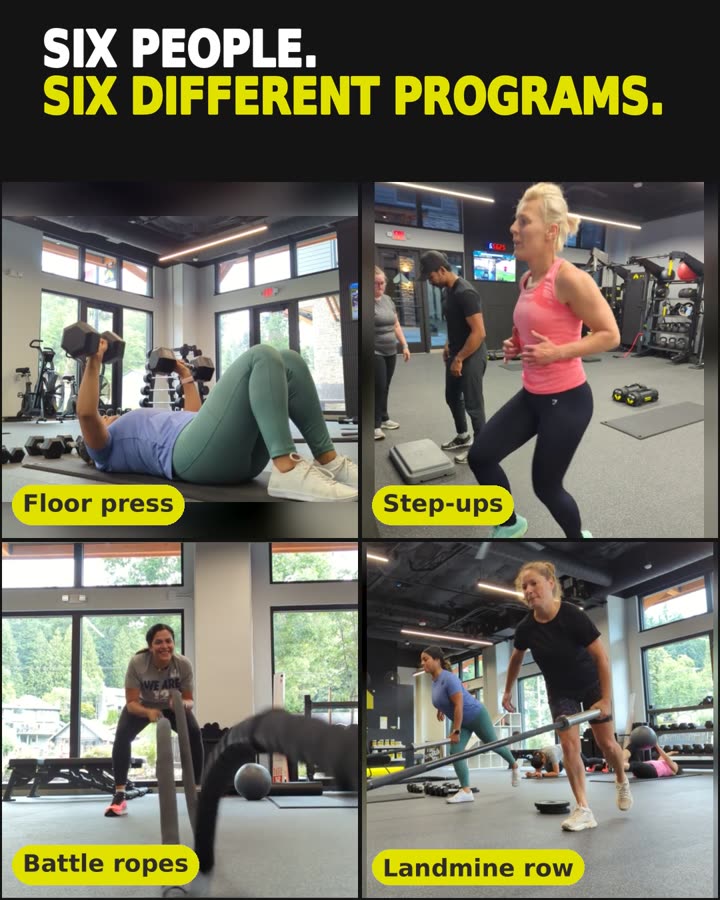
From there, a coach writes a program for you. In 45-minute small group sessions, with one coach and no more than six people, each on their own program, your coach watches every set and has an easier or harder version of every exercise ready. Nutrition guidance is included in every membership. We coach the training and the habits. Your doctor manages the medication.
Common questions
Will I lose muscle on a GLP-1 medication even if I exercise?
You may still lose some lean mass, since that happens with weight loss in general. Strength training and enough protein are the main ways to keep that loss as small as possible.
Is walking enough?
Walking is good for your heart and your mood, and the guidelines include it. But muscle needs a heavier challenge than walking provides, so add strength training at least two days a week.
What if I feel too tired or nauseous to train?
Do a shorter, lighter session, and tell your doctor about side effects that don't settle. A lighter workout still tells your muscles they're needed.
Sources
- Nutritional priorities to support GLP-1 therapy for obesity: a joint Advisory — The American Journal of Clinical Nutrition (2025)
- GLP-1 medications and muscle loss: what to know about nutrition and supplements — Mayo Clinic
- Diet, exercise still important when taking weight-loss medication — Harvard T.H. Chan School of Public Health
- Physical activity guidelines for older adults — CDC
This article is general information, not medical advice. If you have a heart condition, recent surgery or other health concerns, check with your doctor before starting a new exercise program.